The Difficult art of Balance.

How do you remain present in your life while still longing to become more? How do you know when to bend, and when to hold your ground?
Somewhere between presence and ambition, between compromise and self-respect, between staying and walking away, lies the difficult art of balance.
Either we glorify leaving too quickly, or we glorify tolerating what drains us. Either we preach presence, or we romanticize endless self-improvement. And perhaps that is where so much of our suffering begins. Not only because life is hard, but because we do not know how to balance its demands. We do not know whether a difficult moment is asking us to grow, or warning us that something is no longer right. So we leave too soon out of fear, or stay too long out of hope, and call both love. Maybe the problem was never compromise itself. Maybe the problem was that we forgot balance.
We began to think that adjusting meant losing, and that wanting more meant disloyalty to the present. But life has never asked us to choose one side so absolutely. It asks something harder. To know when to bend without breaking. To know when to stay without shrinking. To know when to be grateful for what is, and when to admit that what is, is still not enough. And that is not an easy thing to know. Because life rarely asks us these questions when we are calm. It asks them when we are already attached, already tired, already afraid of losing, already afraid of choosing wrong. It asks them when our judgment is blurred by loneliness, love, guilt, hope, and the quiet desire for things to work out.
Perhaps the most important balance of all is the one you find within yourself first. Because if you do not know yourself, compromise becomes confusion. You begin to call silence maturity, exhaustion patience, and self-abandonment love. If you are insecure, ambition becomes endless hunger, as if nothing you become will ever feel like enough. If you fear discomfort, every challenge begins to feel like a sign to leave. And if you worship suffering, you may stay where you should have walked away.
That is why balance is not moderation in a boring sense. It is clarity. Adjustment without balance becomes self-loss; refusal to adjust becomes ego. Presence matters, but so does the courage to want more from life. There is nothing noble about abandoning yourself, just as there is nothing wise about refusing to soften where life asks you to.
Writing this is easy. Reading it, perhaps, is easy too. Living it is not. Because we are human. Human, and full of inconsistencies. We want depth, but we are frightened by what it demands. We want love, but not always the patience to understand. We want growth, but not always the discomfort that comes with change. And yet, maybe that is where the beauty of life has always been. In its difficulty. In the fact that nothing meaningful asks so little of us.
To truly know another person, to truly build anything meaningful, asks for the courage to stay present through difficulty, to listen deeper, to adapt without disappearing, and to keep becoming without losing balance within oneself. Not every compromise is beautiful. Not every act of staying is wise. Not every desire for more is greed. But somewhere in learning the difference, I think, is where maturity begins.
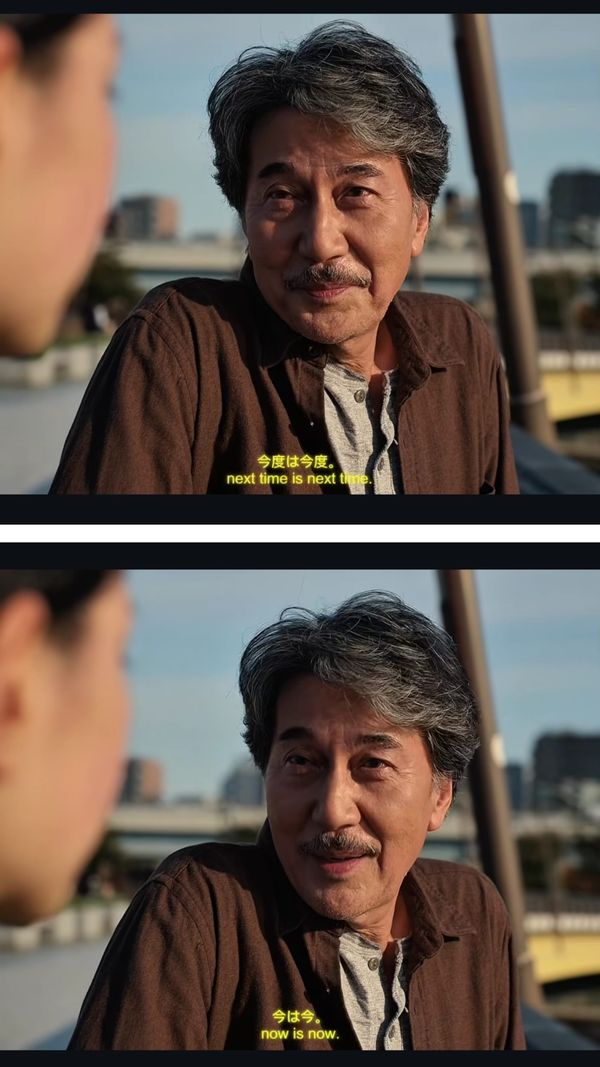
Life is not about choosing comfort or struggle, presence or ambition, selfhood or adjustment. It is about learning the measure of each. About knowing when to soften, when to hold your ground, when to be content, and when to become more. Maybe balance is not something we master once and for all. Maybe it is something life asks of us again and again, in different forms, with different people, at different versions of ourselves.
And maybe that is what makes it so difficult. And so beautiful.